

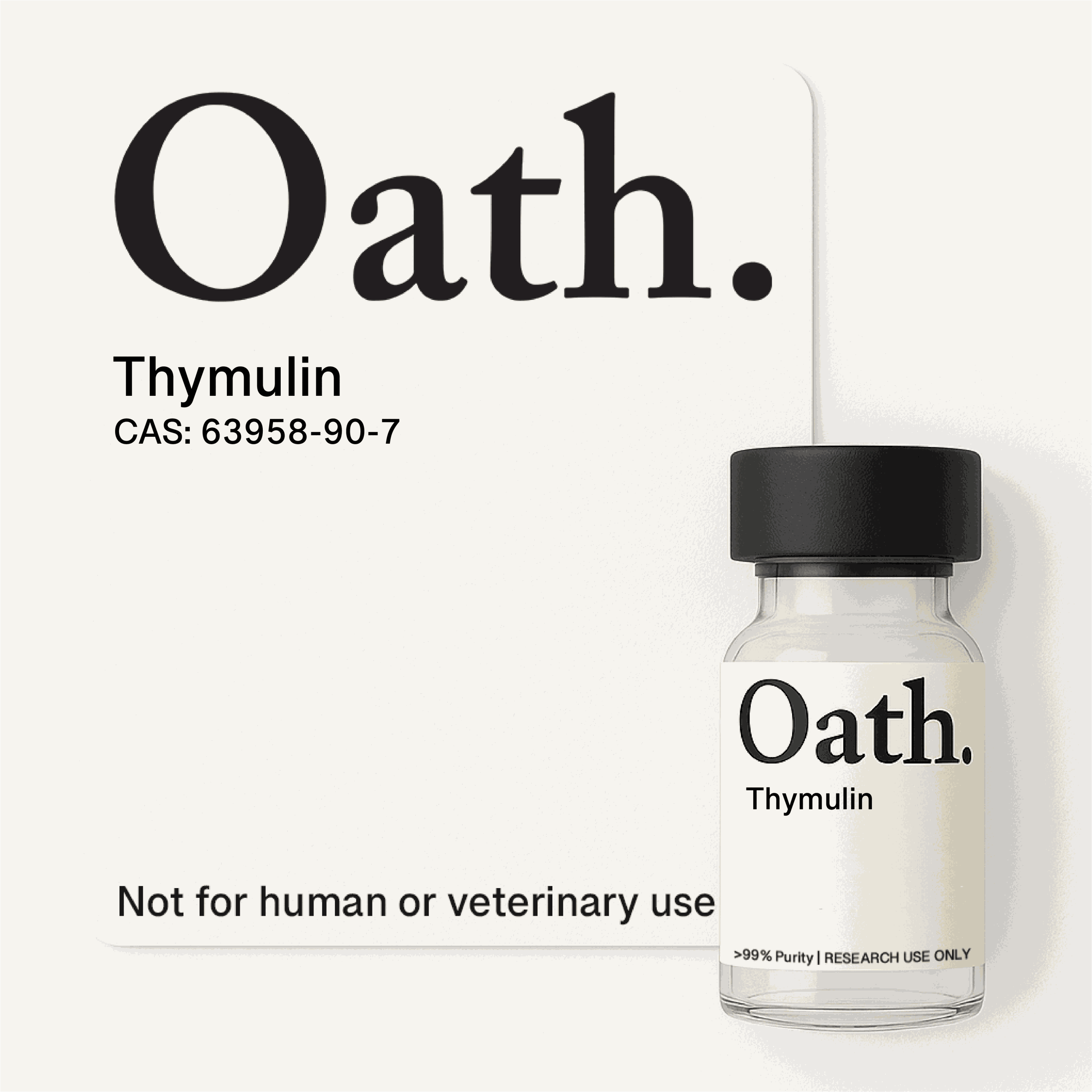
Thymulin Overview
Thymulin research peptide is a thymic nonapeptide used in immunology and peptide-signaling studies. It is listed with 10mg and 5mg options. This listing is written for controlled laboratory and analytical research workflows.
Research Applications
- Useful for cataloging, comparison, and study-design planning involving research peptide materials.
- Appropriate for trained research teams working under documented laboratory protocols.
- Not positioned for diagnostic, therapeutic, veterinary, food, cosmetic, or consumer use.
Quality, Compatibility, and Fitment
Before purchase or import, confirm the selected size, compound identity, batch documentation, storage needs, and study requirements. Compatibility depends on the laboratory protocol, analytical method, and approved research model.
Related Research Products
Explore additional laboratory materials from oath research. Relevant related products include Thymosin Alpha 1, Thymosin Beta-4, Epithalon.
For research use only. Not for human or animal use. No medical, diagnostic, or therapeutic use is intended.
Related products
Blends

Peptides
Peptides
Peptides

Peptides

Peptides